
This story is part of the WHYY News Climate Desk, bringing you news and solutions for our changing region.
From the Poconos to the Jersey Shore to the mouth of the Delaware Bay, what do you want to know about climate change? What would you like us to cover? Get in touch.
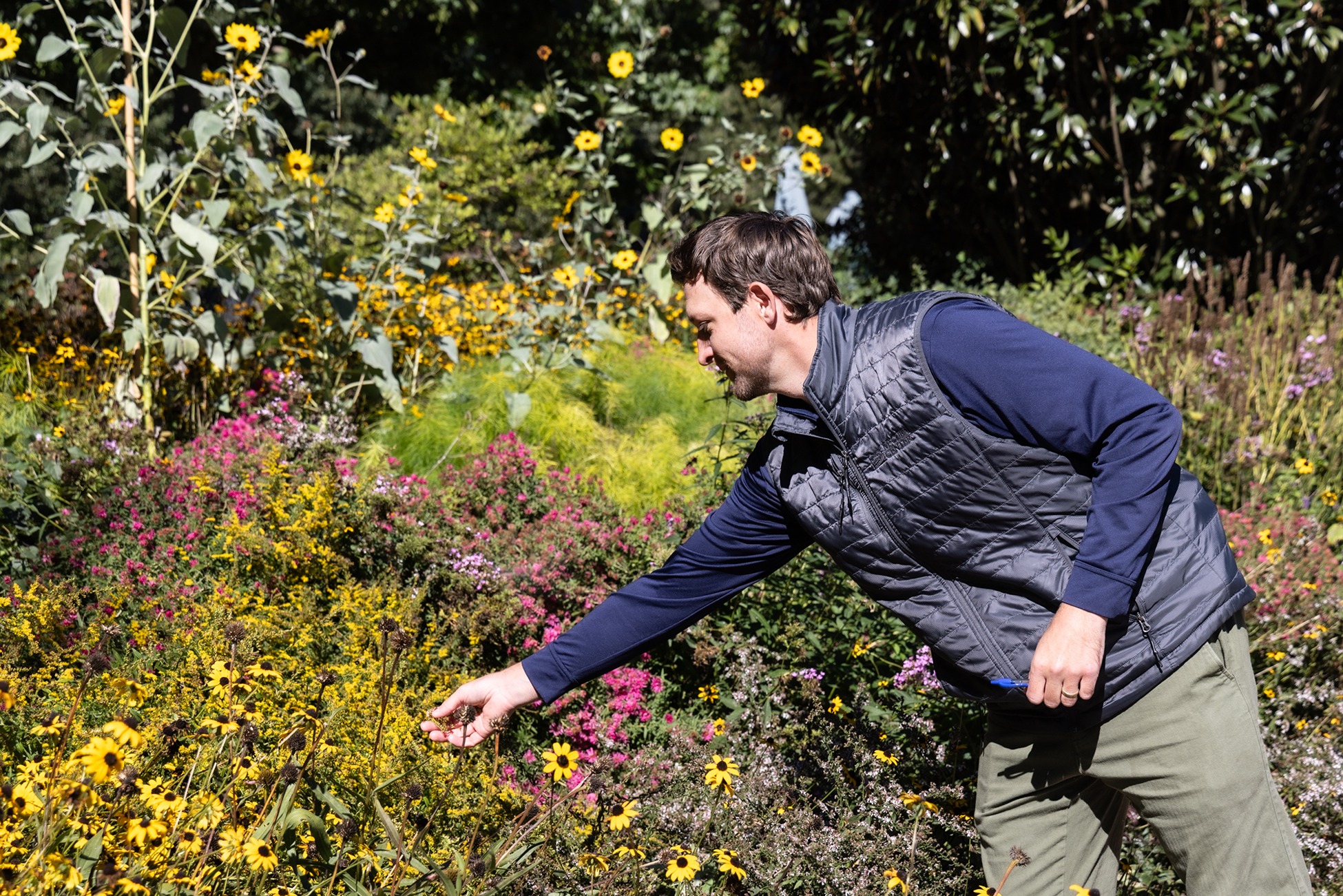
The October morning sun shined brightly, casting a spotlight on a meadow filled with 4-foot tall plants topped with dense clusters of small yellow flowerheads that form a foot-long pyramid.
This field of Solidago speciosa, or “Showy Goldenrod,” filled a sprawling 1-acre meadow garden at Mt. Cuba Center in Hockessin, Delaware. The fall-blooming plants were radiant among black-eyed susans and warm season grasses.
“We are in goldenrod heaven right now,” said Sam Hoadley, manager of horticultural research at Mt. Cuba.
The botanical garden dedicated to native plants is working to dispel myths about the beautiful but misunderstood plant.
With their yellow fall flowers, they’re often falsely associated with allergy season, and people often confuse them with ragweed.
“Goldenrods, although they do have beautiful, yellow, showy flowers, and they’re some of the more eye-catching flowers that do occur during that late season, late summer, early fall period, when allergies can start to become an issue again, they are not actually the cause of seasonal allergies,” Hoadley said.


